Nov 24,2026
Bulk Ingredient Sourcing
Dehydrated Spices: A Buyer's Guide for Food Manufacturers
Most complaints about dehydrated spices are not flavour complaints. They are specification complaints — moisture, mesh, colour and microbiology agreed too loosely at the sample stage, then discovered inside a finished batch.
A seasoning plant receives 500 kg of dehydrated onion flakes against a certificate that states 8–16 mesh. The sieve tells a different story: a fifth of the load passes 40 mesh, the blend dusts on the line, and the filling head clogs twice a shift. Nobody did anything wrong at the blender. The failure happened earlier, in a purchase order that described the ingredient by name and price rather than by measurable limits.
That is the whole argument of this guide. Dehydrated spices should be bought the way any functional ingredient is bought: with a written specification, an agreed test method, a named production site and a sampling plan. The rest of this page covers what the term actually includes in industrial purchasing, which parameters decide acceptance, how raw material and drying method change the result, and where the supply risk really sits.
Where Dehydrated Spices Sit in the Supply Chain
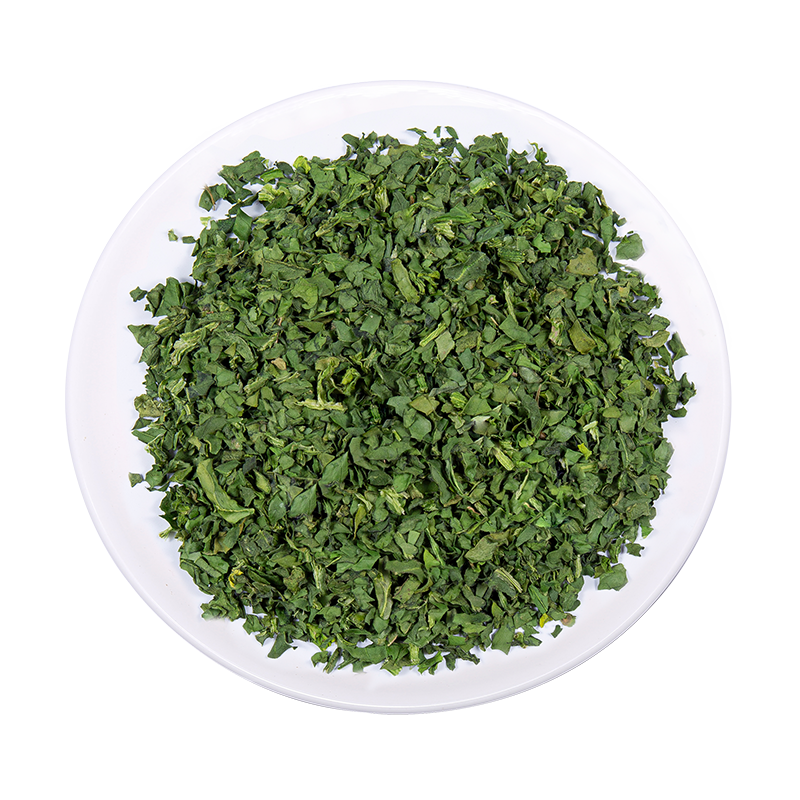
In a home kitchen, "spices" means seed, bark, root and berry — pepper, cumin, cinnamon, clove. In food manufacturing the phrase is used more widely, and it usually covers dehydrated seasoning vegetables and their powders: onion, garlic, leek, spring onion, chilli and bell peppers, tomato, and the blends built from them. These are the materials that give a soup base its savoury depth or a snack seasoning its top note, and they are bought by the tonne rather than by the jar.
The functional groups behave differently, which is why they are specified differently:
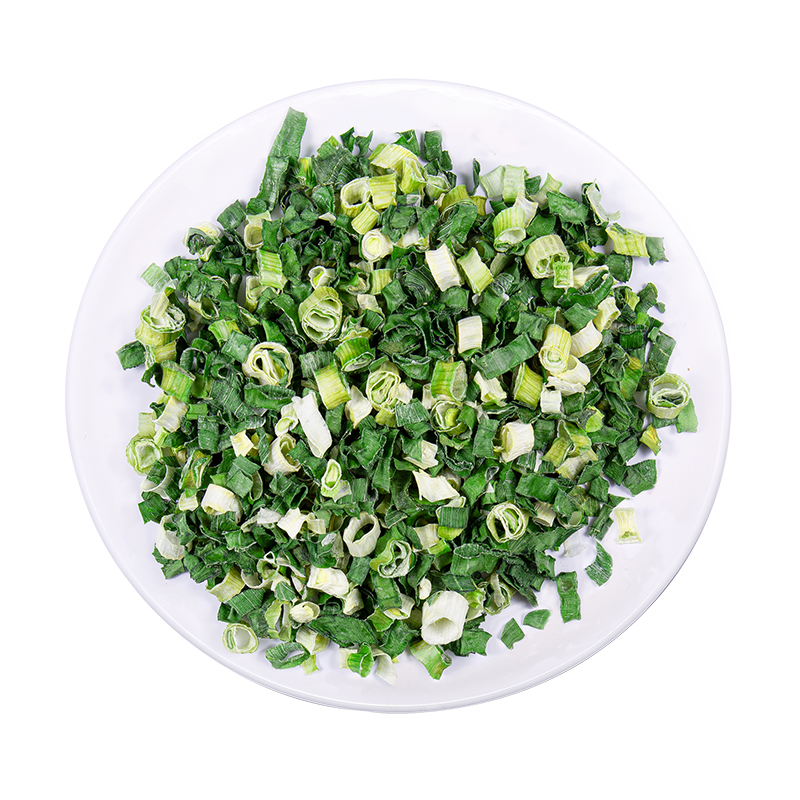
- Alliums — onion, garlic, leek, spring onion. Pungency comes from sulphur compounds that form when cells are cut, so cutting method and drying speed matter as much as the variety.
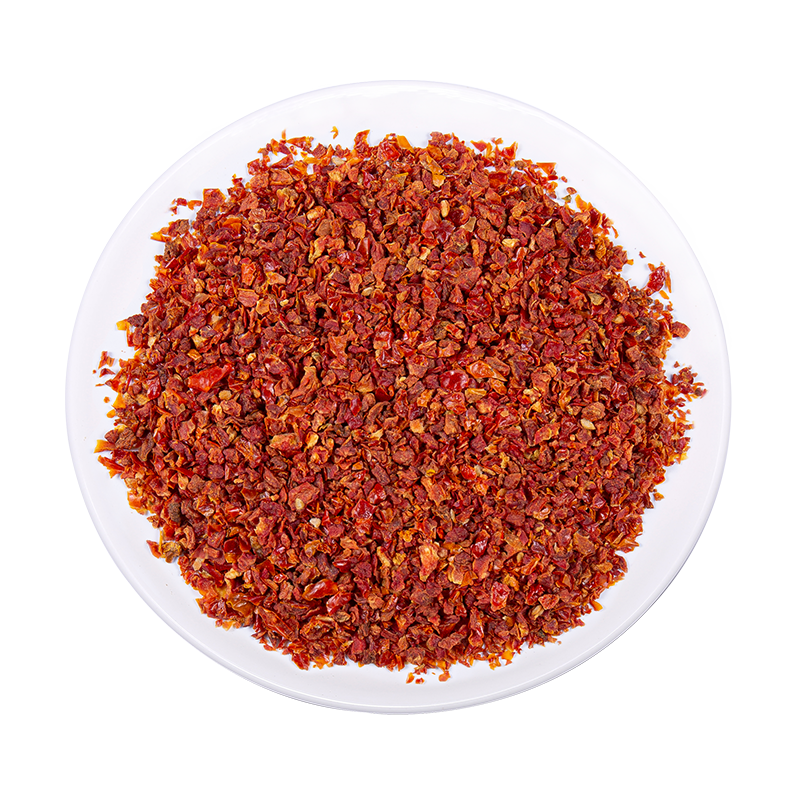
- Capsicums — green pepper, red pepper, jalapeño. Colour and heat are the two quality variables, and both degrade with heat, light and time.
- Fruiting vegetables — tomato, pumpkin. Acidity, sugars and umami; used for body and mouthfeel rather than heat.
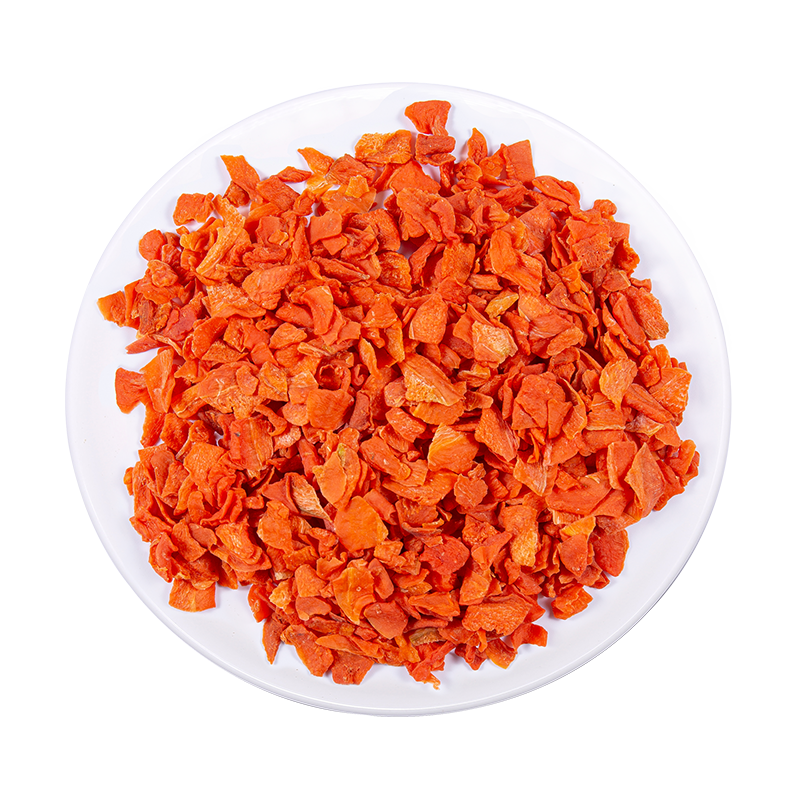
- Roots — carrot, beetroot, potato, sweet potato. Sweetness, colour and texture, often as visible pieces rather than powder.
The distinction between a dehydrated product and a simply dried one is not academic: it changes rehydration behaviour, microbial load and shelf life. Our note on the difference between dehydrated and dried vegetables covers that in detail.
The Specifications That Decide a Purchase
Five parameters do most of the work in an acceptance decision. Everything else — packaging, labelling, documentation — is logistics. The ranges below are indicative only; the real limits are agreed product by product and market by market.
| Parameter | Typical purchasing range | Why it decides acceptance |
|---|---|---|
| Moisture | Roughly 5–8% for powders and granules; tighter for hygroscopic allium powders | Above limit, powders cake in the blender, flow poorly and lose shelf life to mould risk |
| Particle size | Agreed mesh cut verified by sieve test, e.g. 8–16, 40–60 or 80–100 | Wrong cut changes dispersion, visual identity and rehydration speed in the finished product |
| Sulphur dioxide | Declared value, often "free" or capped by the destination market | Border rejection and label declaration problems are expensive and entirely avoidable |
| Microbiological load | Total plate count, coliforms, yeast and mould, absence of Salmonella | Determines whether the ingredient can enter a ready-to-eat or cook-chill line at all |
| Colour and sensory | Visual or instrumented colour plus an aroma and taste panel | Lot-to-lot drift is invisible in the warehouse and very visible in the finished product |
Mesh is not a marketing detail. A 20-point spread around the agreed cut will pass a visual check and fail a sieve test, and by then the material is usually already in your warehouse.
Flavour Comes from the Raw Material, Not the Machine
Two onion powders with identical moisture and mesh can taste completely different. The gap comes from sugar and sulphur-precursor levels at harvest, the time between cutting and the moment the tissue reaches drying temperature, and the temperature profile itself. Slow, low-temperature drying protects volatiles but raises microbial risk; fast, hot drying protects the microbiology but flattens the aroma. A supplier who can explain the trade-off they chose is usually a supplier who controls it.
In dehydrated spices, the dryer sets the ceiling on flavour. The raw material sets the floor.
Colour follows the same logic. Carotenoids in red pepper and tomato degrade with heat, oxygen and light, so storage temperature after delivery matters as much as the drying curve. A pallet held at 30°C for a summer will lose visible colour even though nothing on the certificate of analysis has changed.
 Custom Dehydrated Onion in Chopped, Minced and Powder FormsAir-dried onion with custom cut sizes, suited to seasonings, soups and sauces where rehydration flavor and consistent specifications matter.View Product →
Allium products are the clearest illustration, because pungency is created rather than preserved. Onion and garlic are judged on the strength of the note they release after rehydration, which is why buyers ask for a taste panel alongside the lab report.
Dehydrated Garlic in Flake, Granule and Powder FormsWashed, diced and dried garlic with multiple cut sizes, offering consistent flavor and moisture control for seasonings, soups, sauces and snack applications.View Product →A Sourcing Checklist That Prevents Most Claims
Six questions, asked before the first purchase order, remove most of the arguments that otherwise surface three months later:
- Ask for the specification before the quotation. A price without limits cannot be compared with another price.
- Request a production sample, not a laboratory sample. Pilot-plant material tells you what the line will actually receive.
- Confirm the mesh by sieve test on arrival, and write the test method into the contract.
- Check residue and sulphur dioxide limits against the destination market, not the origin market.
- Ask which plant will produce the lot and which harvest window it comes from.
- Agree that shelf life starts at production date, and state it on the label and the certificate.
A supplier who can answer the plant, harvest and traceability questions in a single reply is usually a supplier who can answer them again during an audit.
Capacity, Certification and Lead Time
Certification is the entry ticket rather than the differentiator. BRC recognition at A+ level, held here since 2024 after first achieving grade A in 2010, tells a buying team that the food safety system has been audited to a recognised standard. What it does not tell them is whether the volume will be there in the fourth quarter.
That question is answered by capacity and by where the raw material grows. Production is split between the Jiangsu site in Xinghua, handling spring onion, carrot, cabbage, onion and sweet potato at roughly 4,000–5,000 tonnes a year, and the Inner Mongolia site in Bayannur, commissioned in 2023, which focuses on green pepper, red pepper, tomato, pumpkin and onion at 2,000–3,000 tonnes a year. A third expansion began in 2025, with completion expected by the end of 2026, adding standardised lines and moving the range toward fruit and vegetable powders alongside the dehydrated vegetables.
Custom Dehydrated Tomato Flakes, Dices, Granules and PowderAir-dried tomato with custom cut sizes and drying levels, suited to soup mixes, sauce premixes, baked toppings and manufacturers needing consistent specifications.View Product →
For a buyer, the practical reading is this: ask for the production calendar, not just the stock list. Pepper and tomato volumes follow a harvest window, and an order placed after that window closes is really an order against someone else's inventory. The full dehydrated vegetable range is worth reviewing early, because specifying two or three items from one supplier usually simplifies both documentation and logistics.
Single-sourcing a colour-critical ingredient is a production risk, not a purchasing saving. Qualify a second origin before you need it.
Matching Format to Application
Format is decided by the process downstream, not by preference:
- Instant noodles and dry soup bases: 8–16 mesh granules that rehydrate within a few minutes in hot liquid and stay visible in the bowl.
- Seasoning blends and dry rubs: 40–60 mesh powders that disperse evenly without dusting the filling line.
- Sauces, pastes and ready meals: fine powder or a high-absorption granule, where the ingredient is there for body rather than appearance.
- Snacks and bakery: flakes and coarse granules, chosen for piece identity after baking or frying.
- Processed meat and pet food: coarse cuts that survive mixing and retorting without turning to paste.
Rehydration ratio belongs in the specification for the same reason. A product that absorbs three times its weight in water behaves very differently in a sauce from one that absorbs five, and the difference shows up as viscosity drift rather than as an obvious fault.
What a Good Dehydrated Spice Order Looks Like
A workable order is short and specific: a specification sheet covering moisture, mesh, sulphur dioxide, microbiology and colour; an agreed sampling and sieve-test method; a named production site and harvest window; a shelf-life clock that starts at production; and a qualified second source for anything colour-critical. Everything else is negotiation.
Buyers who write limits instead of adjectives spend far less time on claims, and their suppliers spend far less time defending lots that were never wrong to begin with.
Dehydrated spices are an ingredient category where the cheapest quotation and the lowest total cost are rarely the same number. Specify tightly, sample production material, and keep the conversation about the plant and the harvest — that is where the quality of the finished product is actually decided.